The Wealth of Nations
Wealth is the output of productive labor, not the hoarding of gold reserves.
Wealth is the output of productive labor, not the hoarding of gold reserves.
Before Adam Smith, the dominant "mercantilist" view was that a nation’s wealth was measured by its stores of gold and silver. Smith staged a paradigm shift by arguing that wealth is actually the "annual produce of the land and labor of the society." This moved the focus from static piles of treasure to dynamic cycles of production and consumption. He proposed that a nation grows rich not by restricting trade to keep gold inside its borders, but by increasing its productivity.
This shift redefined the "wealthy nation" as one where "universal opulence" extends even to the lowest ranks of the people. Smith argued that the only true measure of whether a person is rich or poor is the amount of labor they can afford to purchase or command. By framing economics this way, he turned a moral philosophy into a practical science focused on human standard of living rather than royal treasury accounts.
The "Invisible Hand" turns individual self-interest into collective social benefit.
The "Invisible Hand" turns individual self-interest into collective social benefit.
Smith’s most famous insight is that a complex economy doesn't need a central planner to function. Instead, the "Invisible Hand" of the market uses the self-interest of individuals to allocate resources efficiently. He argued that we don't get our dinner from the benevolence of the butcher or the baker, but from their regard for their own interest. Because they want to profit, they are incentivized to produce what the public wants at a price the public will pay.
This system is powered by the "division of labor," which Smith viewed as the primary driver of economic progress. By breaking tasks into specialized roles, workers become exponentially more efficient, leading to a surplus of goods. However, this specialization is limited by the "extent of the market"—which is why cities near waterways and trade routes historically developed faster than landlocked regions.
Markets are shaped by a constant, "secret" power struggle between capital and labor.
Markets are shaped by a constant, "secret" power struggle between capital and labor.
While often cited as a champion of pure capitalism, Smith was a keen observer of class dynamics and the inherent inequality of bargaining power. He noted that wages are determined by a tug-of-war between workers and "masters" (employers). Smith pointed out that while we often hear about workers "combining" to raise wages, the "combinations" of masters to keep wages low are "always and everywhere" happening, just conducted in "utmost silence and secrecy."
He observed that high wages are a sign of a growing, healthy economy, whereas stagnant or falling wages indicate a society in decline. Smith was deeply concerned with the "severity" of laws against labor unions and the high mortality rates among the children of the poor. He argued that "no society can surely be flourishing and happy, of which the far greater part of the members are poor and miserable."
The greatest threat to the "Free Market" is the collusion of special interests and the state.
The greatest threat to the "Free Market" is the collusion of special interests and the state.
Smith harbored a profound distrust of the "tradesman class" when they sought to influence government policy. He warned that people of the same trade rarely meet together without the conversation ending in a "conspiracy against the public" or a "contrivance to raise prices." These "special interests" (or factions) often try to manipulate the state into creating monopolies or subsidies that benefit them at the expense of the general public.
He argued that the law should never facilitate these assemblies and should be skeptical of any proposal for new trade regulations, as they usually come from people whose interest is "not exactly the same with that of the public." To Smith, a truly free market required not just the absence of government overreach, but the active prevention of "monopolies" and "mercantile systems" that rigged the game for the few.

Image from Wikipedia

Bust of Smith in the Adam Smith Theatre, Kirkcaldy
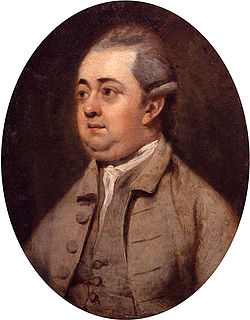
Edward Gibbon praised The Wealth of Nations.

Charles James Fox was the first person to mention The Wealth of Nations in Parliament.
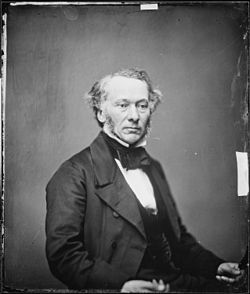
The Wealth of Nations influenced Richard Cobden.
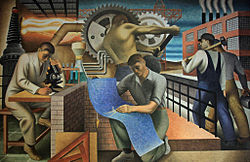
1938 mural "The Wealth of the Nation" by Seymour Fogel is an interpretation of the theme of Social Security.