Jazz
Source: WikipediaJazz emerged as a "confrontation" between African rhythmic rituals and European harmonic traditions.
Born in the late 19th-century African-American communities of New Orleans, jazz is a hybrid of high-contrast musical DNA. It fused the "heterophony" of rural blues and spirituals with the structure of European marches and quadrilles. By the 18th century, slaves in New Orleans’ Congo Square were already laying the groundwork, preserving West African percussive traditions that utilized "counter-metric" structures—rhythms that mirror the nuances of human speech.
This cultural collision transformed the violin and brass instruments of the West into tools for parody and innovation. While European music focused on homophonic church hymns, early jazz adopted a more complex, communal sound. It wasn't a single invention but a gradual "blending of sensibilities" that allowed enslaved people to reclaim their artistic agency through syncopation and a "special relationship to time" known as swing.
The word "jazz" began as baseball slang for energy and a "wobbly" pitch before it was considered too "dirty" for polite society.
Long before it was a genre, "jazz" (or jasm) was a slang term dating back to 1860 meaning pep or energy. Its first recorded use in 1912 didn’t describe music at all, but rather a "jazz ball" thrown by a minor league pitcher because the ball would "wobble" unpredictably. When the term migrated to the music scene in Chicago and New Orleans around 1915, it carried a scandalous reputation; early pioneers like Eubie Blake noted it was often spelled "jass" and considered a "dirty" word unsuitable for ladies.
Defining jazz today remains notoriously difficult because it encompasses a century of radical shifts. It has been described as a "construct"—a collection of musics ranging from ragtime to rock-infused fusion—held together by a common thread of individual expression. As Duke Ellington famously simplified the debate: "It's all music."
Improvisation shifted the seat of power from the composer’s score to the performer’s immediate mood.
In classical music, the goal is fidelity to the score; the performer is a medium for the composer's vision. Jazz inverted this hierarchy. In jazz, the performer is the primary creator, interpreting a tune in ways that ensure no composition is ever played the same way twice. This focus on "spontaneity and vitality" evolved from the call-and-response patterns of plantation work songs, where interaction was more important than a fixed arrangement.
This reliance on the "individual voice" drove the genre's technical evolution. While the Swing era of the 1930s relied on written big-band arrangements, the Bebop revolution of the 1940s stripped things back to small groups where the melody was merely a brief "head" used to launch into long, complex improvisations. Later, Modal and Free jazz abandoned chord progressions and meters entirely, giving musicians total license to play without formal safety nets.
The genre's history is a perpetual tug-of-war between danceable entertainment and "musician's music."
Jazz has always existed in the tension between commercial success and high art. In the 1930s, jazz was the world’s popular dance music, fueled by the "hard-swinging" big bands of Kansas City. however, the 1940s brought a pivot toward Bebop—a faster, more cerebral style played at tempos that were intentionally difficult to dance to. This "musician's music" prioritized technical mastery over audience accessibility, marking a divide that still exists in the jazz community.
This cycle of rebellion repeated with the arrival of Jazz Fusion in the 1960s, which combined improvisation with the electric instruments and volume of rock. Traditionalists often dismissed these evolutions—and later commercial "smooth jazz"—as a betrayal of the genre's roots. Yet, this refusal to settle into fixed norms is exactly what allows jazz to absorb and transform national and local musical cultures wherever it spreads.
Jazz functioned as a rare social bridge for marginalized groups, including women and Jewish Americans.
While often viewed through a binary lens of race, jazz was a complex ecosystem of integration. Jewish Americans, often navigating "probationary whiteness," found natural allies in African-American musicians; composers from Tin Pan Alley and leaders like Benny Goodman helped bring jazz into the mainstream, with Goodman leading one of the first racially integrated bands. The 1938 Carnegie Hall concert was a landmark moment that signaled jazz's arrival as "the single most important" form of American popular music.
Women, though frequently relegated to vocal roles, were vital instrumentalists, composers, and bandleaders. When male musicians were drafted during World War II, all-female bands like the International Sweethearts of Rhythm broke barriers as integrated groups traveling with the USO. From pianist Lil Hardin Armstrong to trombonist Melba Liston, women provided the technical and compositional backbone that allowed jazz to evolve from a New Orleans subculture into a global art form.

American jazz composer, lyricist, and pianist Eubie Blake made an early contribution to the genre's etymology.

Albert Gleizes, 1915, Composition for "Jazz" from the Solomon R. Guggenheim Museum, New York

Billie Davies, avante garde jazz drummer

Ethel Waters sang "Stormy Weather" at the Cotton Club.
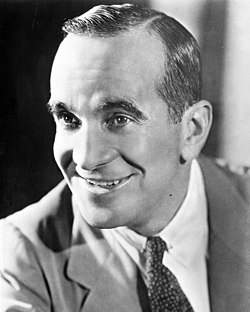
Al Jolson in 1925

Dance in Congo Square in the late 1700s, artist's conception by E. W. Kemble from a century later
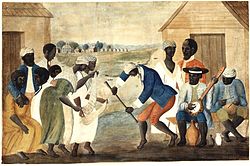
The late 18th-century painting The Old Plantation, depicting African-Americans on a Virginia plantation dancing to percussion and a banjo
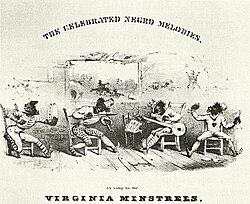
The blackface Virginia Minstrels in 1843, featuring tambourine, fiddle, banjo, and bones
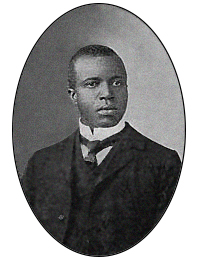
Scott Joplin in 1903
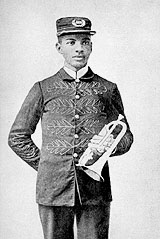
W. C. Handy at 19, 1892

Jelly Roll Morton, a Louisiana Creole jazz artist, c. 1917 or 1918

The King & Carter Jazzing Orchestra photographed in Houston, Texas, January 1921

Louis Armstrong began his career in New Orleans and became one of jazz's most recognizable performers.
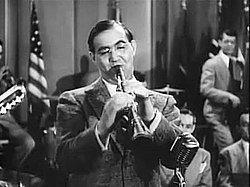
Benny Goodman (1943)
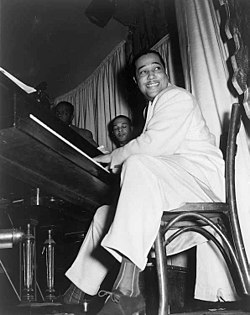
Duke Ellington at the Hurricane Club (1943)