Silent Spring
Post-war military technology was pivoted toward domestic "wars" on nature without public consent
Post-war military technology was pivoted toward domestic "wars" on nature without public consent
In the mid-1940s, the same synthetic chemistry that fueled World War II was redirected toward American agriculture. The U.S. Department of Agriculture (USDA) launched massive aerial spraying campaigns, such as the 1957 fire ant eradication program, which dumped DDT and fuel oil over millions of acres of private land. Carson observed that these programs were launched with "military" fervor but lacked basic scientific oversight regarding long-term consequences.
The personal impetus for the book came from a 1958 letter written by Carson’s friend, Olga Owens Huckins, who described the mass death of birds on her property following mosquito spraying. This letter transformed Carson's general concern into a focused investigation. She realized that the government was not just permitting these toxins but was actively promoting them through "flagrant propaganda" films that ignored the mounting evidence of ecological collapse.
Carson redefined "pesticides" as "biocides" to highlight their indiscriminate lethality
Carson redefined "pesticides" as "biocides" to highlight their indiscriminate lethality
The core argument of Silent Spring is that chemicals like DDT do not stay where they are sprayed; they move through the food chain via bioaccumulation. Carson argued that the term "pesticide" was a misnomer because these chemicals rarely limited their damage to a single target. Instead, they acted as "biocides," killing everything from soil microbes to the apex predators of the sky.
Beyond ecological damage, Carson linked these synthetic poisons to human health, specifically cancer. Working with researchers like Wilhelm Hueper of the National Cancer Institute, she presented evidence that pesticides were carcinogens—a claim that was revolutionary and highly controversial at the time. She predicted a bleak future—a "silent spring"—where the birds were gone, not because of a direct hunt, but because their reproductive cycles had been shattered by a chemical-laden environment.
The book was written as a race against time while Carson battled terminal illness and industry threats
The book was written as a race against time while Carson battled terminal illness and industry threats
Carson’s four-year research project was a feat of endurance. By 1960, as she was cataloging hundreds of cases of pesticide damage, she was diagnosed with metastatic breast cancer. She underwent a mastectomy and radiation therapy while finishing the manuscript, often bedridden and fearing she would not have the energy to defend the work against the "fierce opposition" she knew was coming from the chemical industry.
Aware that she would be sued for libel or dismissed as hysterical, Carson built an ironclad case. She relied on a "sizable community" of government scientists who secretly supplied her with confidential data they were unable to publish themselves. This network allowed her to contrast the industry’s marketing claims with the actual, documented physiological effects of chemical exposure, making the book nearly impossible for critics to debunk on factual grounds.
Silent Spring shifted environmentalism from a private hobby to a mandate for federal protection
Silent Spring shifted environmentalism from a private hobby to a mandate for federal protection
Before 1962, "conservation" was largely the domain of birdwatchers and hikers. Carson’s work politicized the environment, arguing that citizens had a right to be protected from "environmental poisons" distributed by the state. She accused public officials of accepting industry claims "unquestioningly," sparking a crisis of trust in government expertise that helped birth the modern environmental movement.
The backlash from chemical companies was intense, but it backfired by drawing more attention to her claims. The book eventually forced a total reversal in U.S. pesticide policy, including a nationwide ban on DDT for agricultural use. Most significantly, the public outcry following the book’s publication led directly to the 1970 creation of the U.S. Environmental Protection Agency (EPA), establishing the environment as a permanent pillar of American law.

Image from Wikipedia
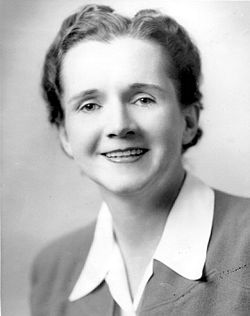
Rachel Carson, 1940 Fish and Wildlife Service employee photo