Pragmatism
Philosophical thought shifts from "mirroring" reality to providing tools for action
Philosophical thought shifts from "mirroring" reality to providing tools for action
Pragmatism rejects the ancient idea that the mind is a mirror reflecting an external world. Instead, it treats ideas, language, and theories like a Swiss Army knife—tools designed for prediction, problem-solving, and survival. If a concept helps you navigate a situation or solve a problem, it has value; if it doesn't, it is essentially meaningless.
This approach moves the goalposts of philosophy from finding "The Truth" to evaluating "The Success." Topics like knowledge, science, and language are judged not by how accurately they describe a hidden reality, but by their practical use. In this view, a belief is not a "picture" of the world, but a "disposition to act."
The "Pragmatic Maxim" defines meaning as the sum of an object’s practical effects
The "Pragmatic Maxim" defines meaning as the sum of an object’s practical effects
Charles Sanders Peirce, the movement’s founder, established the "Pragmatic Maxim" to clear up conceptual confusion. He argued that our conception of any object is simply the sum of our conception of its practical effects. If two different ideas lead to the exact same practical result, they are effectively the same idea.
This turned philosophy into a method of experimental reflection. It forces thinkers to stop arguing about abstract definitions and start asking: "What observable difference would it make if this were true?" It is a method hospitable to the scientific method, focusing on verifiable consequences rather than rationalistic speculation.
Knowledge is always tentative, but genuine doubt must be earned through experience
Knowledge is always tentative, but genuine doubt must be earned through experience
Pragmatists balance a "fallibilist" outlook (the admission that we might always be wrong) with a rejection of radical skepticism. They argue that you cannot "feign" doubt as Descartes did; real doubt is an "irritation" that arises only when a specific belief fails to handle a specific situation.
Inquiry is the process of resolving that irritation to return to a settled state of belief. Because we lack a "God’s-eye-view," all human knowledge is partial and subject to revision. However, this doesn't mean we know nothing; it means we act on the best available tools until a "recalcitrant fact" proves them broken.
"Truth" is a functional label for successful inquiry rather than a permanent property
"Truth" is a functional label for successful inquiry rather than a permanent property
William James famously described truth’s "cash value," a phrase often misinterpreted as "whatever feels good is true." James clarified that truth is "what works" in the long run. It is an ecological account of knowledge: ideas survive when they help an organism successfully navigate its environment over time.
Truth is not a static trophy found at the end of a journey; it is a process. To a pragmatist, "the true" is simply a name for the "expedient in our way of thinking." It acknowledges an external world that must be dealt with, but insists that "real" and "true" are labels we use during inquiry, not descriptions of a reality outside of human experience.
Neopragmatism revived the tradition by dismantling the "Mirror of Nature"
Neopragmatism revived the tradition by dismantling the "Mirror of Nature"
After a mid-century decline, pragmatism saw a massive resurgence through thinkers like W.V.O. Quine and Richard Rorty. They attacked the "Cartesian dream" of absolute certainty, arguing that philosophy cannot be a "pure" discipline separate from the empirical sciences.
Rorty’s brand of neopragmatism became especially influential by criticizing the "Mirror of Nature"—the idea that philosophy’s job is to validate how well we represent reality. Modern pragmatism is now split between a strict "analytic" tradition and a "neo-classical" approach that returns to the original work of Peirce, James, and Dewey to solve contemporary problems in ethics and science.
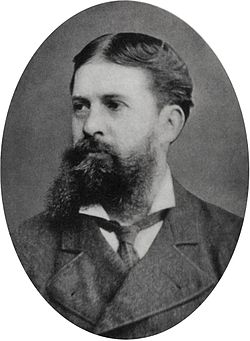
Charles Peirce, an American polymath, first identified pragmatism.

Hilary Putnam said that the combination of antiskepticism and fallibilism is a central feature of pragmatism.

The "Chicago Club" including Mead, Dewey, Angell, and Moore. Pragmatism is sometimes called American pragmatism because so many of its proponents were and are Americans.

William James tried to show the meaningfulness of (some kinds of) spirituality but, like other pragmatists, did not see religion as the basis of meaning or morality.

A laptop computer next to archival materials