Nihilism
Nihilism is not a single doctrine but a "family of no" that rejects the foundations of meaning, morals, and even physical reality.
Nihilism is not a single doctrine but a "family of no" that rejects the foundations of meaning, morals, and even physical reality.
While often simplified as "believing in nothing," nihilism is a broad philosophical umbrella covering ethics, knowledge, and metaphysics. It isn't just about the "meaning of life"; it can be as specific as mereological nihilism, which argues that composite objects (like chairs or tables) don't actually exist—only the elementary particles that make them up do.
At its core, any nihilistic view involves the rejection of a fundamental concept most people take for granted. This includes moral nihilism (denying that right and wrong exist), epistemological nihilism (denying that truth is possible), and existential nihilism (the belief that life lacks intrinsic purpose). It is a "metaphysical cleanup," stripping away layers of human interpretation to see what—if anything—remains.
Existential nihilism transforms the "meaningless" universe from a source of despair into a blank canvas for human agency.
Existential nihilism transforms the "meaningless" universe from a source of despair into a blank canvas for human agency.
The realization that the universe is indifferent to human suffering and achievement often triggers an existential crisis, leading to boredom, anxiety, or depression. Philosophers argue that if there is no "higher" purpose, then all human effort is ultimately transient and futile. However, the history of the movement is defined by how thinkers choose to react to this void rather than just wallowing in it.
Responses to this vacuum are diverse. Friedrich Nietzsche suggested using nihilism as a "hammer" to destroy old, decayed values so that new, life-affirming ones could be built. Jean-Paul Sartre argued that the lack of cosmic meaning gives humans "radical freedom" to define themselves. Meanwhile, Albert Camus proposed Absurdism, suggesting we should recognize the absurdity of searching for meaning and live defiantly in spite of it.
Moral nihilism argues that "right" and "wrong" are not objective facts, but rather evolutionary or social fictions.
Moral nihilism argues that "right" and "wrong" are not objective facts, but rather evolutionary or social fictions.
Unlike people who simply behave "badly," moral nihilists argue that the very concept of morality is an error. This "Error Theory" suggests that when we say "murder is wrong," we are making a claim about a moral property that doesn't actually exist in the physical world. They view moralities as useful tools for survival or social control, lacking any objective foundation in reality.
This perspective often clashes with "moral realism," the idea that moral truths are as real as the laws of physics. Critics of moral nihilism argue that it erodes social trust and leads to antisocial behavior. However, proponents point out that recognizing morality as a human construct doesn't mean we must stop using it; it simply means we must acknowledge that our values are choices we make, not truths we discover.
The concept evolved from an 18th-century insult into a definitive diagnosis of the modern Western condition.
The concept evolved from an 18th-century insult into a definitive diagnosis of the modern Western condition.
The term "nihilism" was first used in Germany by Friedrich Heinrich Jacobi as a critique of Enlightenment rationalism, which he feared would eventually reduce everything to nothingness. It gained widespread fame in 19th-century Russia through Ivan Turgenev’s novel Fathers and Sons, describing a generation of radicals who "did not bow before any authorities" and sought to dismantle the existing social order.
In the 20th century, Friedrich Nietzsche popularized the idea that nihilism was the inevitable result of "the death of God" and secularization. He warned that as traditional religious and moral frameworks collapsed, Western culture would fall into a state of aimlessness. This prediction fueled various movements, from the chaotic art of Dadaism to the skeptical inquiries of postmodernism, all grappling with how to live in a world stripped of its old certainties.

Different forms of nihilism reject distinct aspects of existence, such as a higher meaning, morality, and knowledge.

Friedrich Heinrich Jacobi coined the term nihilism as a philosophical concept.

Friedrich Nietzsche described nihilism as the process in which "the highest values devaluate themselves".

Considering the problem of existential nihilism, Jean Paul Sartre proposed that people can make their lives meaningful by inventing themselves and their values.

Exploring antifoundationalism, Jean-François Lyotard challenged metanarratives that aim to provide universal frameworks of rational understanding.

Dadaism expresses nihilistic themes in art by challenging artistic standards, for example, by presenting Fountain, a readymade urinal, at a 1917 art exhibition.

Edvard Munch's 1893 painting The Scream is sometimes associated with nihilism due to its theme of existential terror.
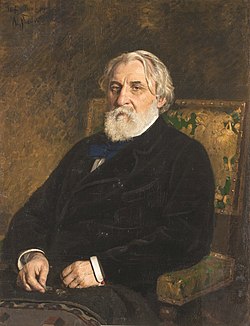
In 19th-century Russia, Ivan Turgenev was responsible for popularizing the term nihilism.

Martin Heidegger conceived of nihilism as a fundamental historical movement in Western thought.