Metaphysics
Metaphysics serves as "first philosophy," investigating the invisible scaffolding that allows physical reality to exist.
Metaphysics serves as "first philosophy," investigating the invisible scaffolding that allows physical reality to exist.
While physics measures how objects behave, metaphysics asks what it means for an object to "be" in the first place. It is the study of the most elementary features of reality, ranging from the nature of existence and time to the relationship between mind and matter. For thinkers like Aristotle, it was the "first philosophy" because every other branch of knowledge—from biology to ethics—implicitly relies on metaphysical assumptions about cause, effect, and identity.
The field's name is actually a historical accident. It stems from the Greek metá ta phusiká ("what comes after the physics"), likely because an early editor placed Aristotle’s unnamed works on the nature of reality immediately after his books on Physics. Today, the term has evolved to describe inquiries that go "beyond" the empirical, seeking the fundamental principles that govern any possible world, not just our own.
The world is divided between unique, unrepeatable "particulars" and the "universals" that describe them.
The world is divided between unique, unrepeatable "particulars" and the "universals" that describe them.
One of the most enduring metaphysical puzzles is how different things can share the same properties. A "particular" is a specific, unique entity—like a specific apple or the Eiffel Tower. A "universal" is a general feature that many particulars can have in common, such as the color "red" or the quality of "humanity." This leads to the "Problem of Universals": does "redness" exist as a real thing in the universe, or is it just a name humans use to group similar objects?
Philosophers are split on what actually makes up a "particular" object. Substratum theorists believe an object has an underlying core (a "bare particular") that holds its properties. In contrast, bundle theorists argue that an object is nothing more than a collection of its properties tied together; if you take away the color, shape, and mass of an apple, there is no "apple" left underneath.
Mereology challenges our common sense by questioning if "wholes"—like tables or clouds—actually exist or are just accidental clusters.
Mereology challenges our common sense by questioning if "wholes"—like tables or clouds—actually exist or are just accidental clusters.
We usually assume that when you put parts together, they form a new "whole" thing, but metaphysicians study the rules of this composition (mereology). Mereological nihilists argue that there are no such things as tables or clouds; there are only "particles arranged table-wise." In this view, our brains create the "whole," but reality only contains the smallest possible building blocks.
On the other end of the spectrum, mereological universalists believe that any collection of things forms a whole. Under this logic, the left half of your coffee mug and the moon technically compose a single, complex object. The debate is not merely semantic; it changes how we understand the boundaries of identity and whether objects truly persist through time if their parts are replaced.
Modern metaphysics has shifted from exploring an external world to analyzing the "conceptual goggles" of human understanding.
Modern metaphysics has shifted from exploring an external world to analyzing the "conceptual goggles" of human understanding.
Historically, metaphysics aimed to describe a "mind-independent" reality—the world as it exists when no one is looking. However, starting with Immanuel Kant, a major shift occurred. Kant argued that we can never truly see the "thing-in-itself." Instead, he focused on the conceptual framework of the human mind—the "goggles" through which we perceive space, time, and causality.
This led to a distinction between descriptive metaphysics, which maps the conceptual schemes we actually use to understand the world, and revisionary metaphysics, which tries to build better, more accurate systems of thought. Rather than just hunting for the "truth" of the universe, many modern metaphysicians examine how our language and categories shape our experience of reality.
As the most abstract branch of philosophy, metaphysics is constantly forced to defend its own legitimacy through "meta-metaphysics."
As the most abstract branch of philosophy, metaphysics is constantly forced to defend its own legitimacy through "meta-metaphysics."
Because metaphysics deals with things that cannot be seen or measured—like "necessity" or "essence"—it has faced intense criticism, especially in the 20th century. Critics argue that metaphysical theories are often "meaningless" because they cannot be verified by scientific experiment. This pushback birthed the field of meta-metaphysics, which investigates the methods and validity of metaphysical inquiry itself.
Despite these challenges, the field has found practical "applied" uses in the digital age. In artificial intelligence and computer science, "ontologies" (a branch of metaphysics) are used to create complex classification systems that allow machines to understand the relationships between different types of data. Even in medicine, metaphysics helps define the "status" of a disease—asking whether a diagnosis refers to a real, physical entity or just a cluster of symptoms.

The beginning of Aristotle's Metaphysics, one of the foundational texts of the discipline
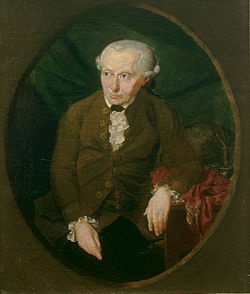
Immanuel Kant conceived metaphysics from the perspective of critical philosophy as the study of the principles underlying all human thought and experience.

Different approaches toward resolving the mind–body problem

David Hume criticizes metaphysicians for trying to gain knowledge outside the field of sensory experience.
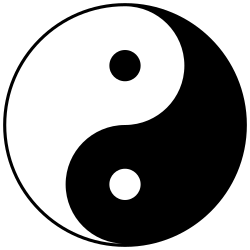
The taijitu symbol shows yin and yang, which are two correlated forces discussed in Chinese metaphysics to explore the nature and patterns of existence.

Boethius's theory of universals influenced many subsequent metaphysicians.

Alfred North Whitehead articulated the foundations of process philosophy in his work Process and Reality.