Jonestown
Jonestown was sold as a radical socialist utopia to escape American racial and economic oppression.
Jonestown was sold as a radical socialist utopia to escape American racial and economic oppression.
The Peoples Temple, led by Jim Jones, was not a traditional religious cult but an integrated movement focused on "apostolic socialism." By the mid-1970s, Jones moved his congregation from California to the Guyanese jungle to establish the Peoples Temple Agricultural Project. To the predominantly Black and marginalized membership, Jonestown promised a world free from the systemic racism and "capitalist tyranny" of the United States.
In its early stages, the community functioned as a self-sufficient commune. Members worked the land, communalized their assets, and lived in a society where racial equality was the primary law. However, this idealistic facade masked a growing paranoia. Jones used the promise of a "rainbow family" to exert total control over his followers' lives, finances, and communications.
The Guyanese jungle served as both a promised land and an inescapable prison.
The Guyanese jungle served as both a promised land and an inescapable prison.
Geography was the ultimate tool of control. The settlement was intentionally isolated, accessible only by a long boat ride or a small airplane. While the isolation was marketed as protection from external enemies, it effectively trapped the members. The harsh tropical climate made agricultural success difficult, leading to chronic food shortages and physical exhaustion for the laborers.
Life inside the compound was regulated by "the loudspeaker," through which Jones’s voice was broadcast 24 hours a day. Members were subjected to "White Nights"—emergency rehearsals for mass suicide—designed to test their loyalty and desensitize them to the idea of death. Between the dense jungle and the armed guards (the "Public Service Unit"), there was virtually no way to leave without permission.
Congressman Leo Ryan’s investigation acted as the unintended catalyst for the final catastrophe.
Congressman Leo Ryan’s investigation acted as the unintended catalyst for the final catastrophe.
The tragedy was triggered by a fact-finding mission led by U.S. Representative Leo Ryan in November 1978. Pressured by the "Concerned Relatives" group, Ryan traveled to Jonestown to investigate reports of human rights abuses. While the visit began with a deceptive display of harmony, several members used the opportunity to pass secret notes to Ryan’s team, pleading for help to escape.
As Ryan attempted to depart from the Port Kaituma airstrip with 15 defectors, Temple gunmen opened fire. They killed Ryan—the only U.S. Congressman ever assassinated in the line of duty—along with three journalists and one defector. This act of violence convinced Jones that the "hostile" outside world would inevitably destroy his community, leading him to activate his final "revolutionary suicide" plan.
The massacre was a choreographed act of mass murder rather than a collective choice.
The massacre was a choreographed act of mass murder rather than a collective choice.
On the evening of November 18, 1978, 918 people died. While the event is often termed a "mass suicide," the reality was far more coercive. Armed guards surrounded the central pavilion as a mixture of cyanide, sedatives, and Flavor Aid was distributed. The children were the first to die, poisoned by their parents and nurses; this ensured the adults felt they had nothing left to live for.
Evidence, including the "death tape" recording of the final moments, shows that many victims were injected with poison against their will or forced to drink at gunpoint. It remains one of the largest losses of American civilian life in a single non-natural act, surpassed only by the September 11 attacks. The sheer scale of the death toll, particularly the 304 children, shifted the global perception of cult dynamics from peripheral oddities to lethal threats.
The tragedy's legacy persists through a linguistic cliché that masks the horror of the victims.
The tragedy's legacy persists through a linguistic cliché that masks the horror of the victims.
The phrase "drinking the Kool-Aid" has become a staple of modern English, used flippantly to describe someone who blindly follows a dangerous idea. This metaphor is factually inaccurate—the brand used was primarily Flavor Aid—and it diminishes the experience of the victims. It frames the dead as willing fools rather than people who were systematically manipulated and, in many cases, physically forced to die.
The ruins of Jonestown have since been reclaimed by the jungle, but the psychological impact remains. The event led to a massive shift in how the U.S. government monitors extremist groups and how the public perceives charismatic leadership. For many survivors and historians, the real lesson of Jonestown is not about religious fervor, but about how isolation and the erosion of individual agency can turn a quest for social justice into a nightmare.

The entrance to Jonestown, 1978
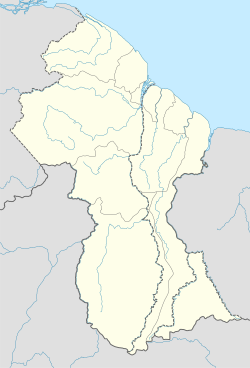
class=notpageimage| The Peoples Temple Agricultural Project's places of interest in Guyana
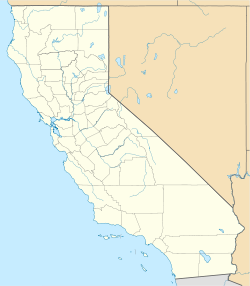
class=notpageimage| Some of the Peoples Temple California locations
The logo of The Peoples Temple, led by Jim Jones, which controlled the commune until late 1978

Jim Jones, founder of The Peoples Temple

Jonestown Cottages

Houses in Jonestown
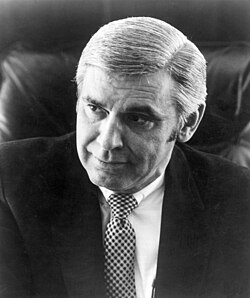
Congressman Leo Ryan

Photo of the DHC-6 Twin Otter before attack
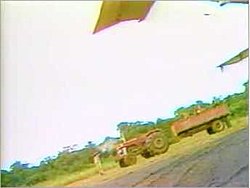
Image from Wikipedia

An aerial view of the dead in Jonestown

Flavor Aid packets recovered from Jonestown after the murder-suicides, on display at Graveface Museum in Savannah, Georgia

Pictures of those who died in Jonestown laid out at a 2011 memorial service

The grave site at Evergreen Cemetery in Oakland, California, and the memorial plaques