Hindenburg disaster
The Hindenburg was the pinnacle of 1930s luxury travel, designed for comfort but compromised by flammable hydrogen.
The Hindenburg was the pinnacle of 1930s luxury travel, designed for comfort but compromised by flammable hydrogen.
The LZ 129 Hindenburg was a marvel of German engineering and the largest flying machine ever built. At over 800 feet long, it was the lead ship of a class designed to dominate transatlantic travel. While its rival—the burgeoning airplane industry—was loud and cramped, the Hindenburg offered passengers quiet, hotel-like accommodations. However, this luxury relied on a precarious lift source: seven million cubic feet of highly flammable hydrogen gas.
By May 1937, the Hindenburg had already completed ten successful trips to the United States. Its fatal voyage began in Frankfurt with only half its passenger capacity, though it was fully booked for the return leg. This routine commercial flight was intended to solidify the zeppelin’s status as a reliable mode of international transport, unaware that it would instead become the vessel's final journey.
A sequence of high-pressure landing maneuvers and poor weather created the perfect conditions for a static discharge.
A sequence of high-pressure landing maneuvers and poor weather created the perfect conditions for a static discharge.
The disaster occurred after a series of delays caused by thunderstorms over New Jersey. To make up for lost time, Captain Max Pruss performed a "flying moor"—a high-altitude landing procedure that was common for American airships but rarely practiced by the Hindenburg. As the ship approached the Lakehurst Naval Air Station, it was forced to make sharp S-turns to align with the mooring mast, which many experts believe put undue stress on the internal structure.
Moments before ignition, the crew dropped water ballast and valved gas to correct a "stern-heavy" tilt, but the ship remained out of trim. Eyewitnesses reported seeing a dim blue glow—likely St. Elmo’s Fire or static electricity—near the upper fin. When the mooring lines touched the ground, they likely acted as a ground wire, allowing a static spark to ignite hydrogen leaking from a cell potentially ruptured during those final sharp turns.
The world’s largest aircraft was consumed by fire in less than 40 seconds, yet the majority of those on board survived.
The world’s largest aircraft was consumed by fire in less than 40 seconds, yet the majority of those on board survived.
Once the fire started, the destruction was nearly instantaneous. The flame front spread across the fabric skin at roughly 49 feet per second. As the hydrogen burned, the stern lost buoyancy and crashed into the ground, causing the bow to lurch upward before collapsing. From the first sign of fire to the final crash, the entire event lasted between 32 and 37 seconds.
Despite the visual ferocity of the inferno, 62 of the 97 people on board survived. Many passengers escaped by jumping out of the promenade windows as the airship descended. The fatalities—13 passengers, 22 crew members, and one ground crewman—were largely the result of the initial blast or the diesel fuel fire that continued to burn for hours after the hydrogen had dissipated.
Herbert Morrison’s "Oh, the humanity!" broadcast transformed a local accident into a global cultural trauma.
Herbert Morrison’s "Oh, the humanity!" broadcast transformed a local accident into a global cultural trauma.
The Hindenburg disaster was one of the first major catastrophes to be captured extensively on film and audio. Herbert Morrison’s eyewitness radio report became legendary for its raw emotion. While Morrison was actually recording for a delayed broadcast, his frantic narration was later synced with newsreel footage, creating the illusion of a live, televised event. This visceral media coverage stripped away the airship's image of safety and majesty in a single afternoon.
The imagery was so powerful that it effectively "erased" the successful safety record of the Zeppelin company, which had previously flown over a million miles without a single passenger injury. While the Nazi government in Germany attempted to downplay the disaster, the graphic newsreels shown in American theaters made the giant rigid airship a symbol of technological failure rather than progress.
The catastrophe didn't just destroy a ship; it ended the era of the commercial airship in favor of faster airplanes.
The catastrophe didn't just destroy a ship; it ended the era of the commercial airship in favor of faster airplanes.
The Hindenburg’s demise marked the abrupt end of the "Great Airships." Public confidence was shattered, and the arrival of faster, heavier-than-air aircraft from companies like Pan American Airlines made the 80-mph zeppelins obsolete. The advantage of luxury could not overcome the new public perception of airships as "floating bombs."
The legacy of the Hindenburg even extended into the early stages of World War II. After the disaster, the remaining German zeppelins were grounded and eventually scrapped in 1940. The duralumin frames of the Hindenburg and its sister ships were recycled into military aircraft for the Luftwaffe, turning the skeletons of failed luxury travel into the machines of a global conflict.

Image from Wikipedia

Hindenburg begins to fall seconds after catching fire.

Hindenburg disaster sequence from the Pathé Newsreel, showing the bow nearing the ground

The fire bursts out of the nose of the Hindenburg, photographed by Murray Becker.

Photograph by Arthur Cofod Jr.

Closeup of the wreckage after a few weeks

The wreckage of the Hindenburg the morning after the crash. Some fabric remains on the tail fins.

Fabric of the Hindenburg, held in the Steven F. Udvar-Hazy Center
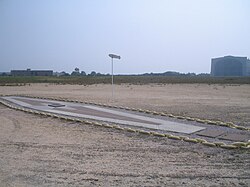
Current marker at the disaster site, shown with Hangar No. 1 in background