Ethics
Ethics operates as a rational filter, separating biological impulses and social conventions from "universal rightness."
Ethics operates as a rational filter, separating biological impulses and social conventions from "universal rightness."
While many people conflate ethics with what they feel like doing or what society requires, the field is actually a systematic inquiry into practical reasons. It asks "How should one live?" and "What gives life meaning?" rather than simply describing how people behave. This distinction separates "normative ethics" (the study of what we ought to do) from "descriptive ethics" (the sociological study of what people actually believe).
The discipline is built on the pursuit of universal principles that apply across different cultures and eras. It seeks to provide a rational system of moral principles—like the "medical ethics" followed by doctors or the "Protestant work ethic" found in specific social groups—to guide behavior in complex, real-world situations.
Three dominant frameworks compete to define the source of moral value: outcomes, duties, or character.
Three dominant frameworks compete to define the source of moral value: outcomes, duties, or character.
Normative ethics is largely divided into three rival schools. Consequentialists argue that the morality of an act is found entirely in its results—an act is right if it leads to the "best future." Deontologists counter that certain acts are inherently right or wrong regardless of the outcome; morality is a matter of following duties, such as honesty or promise-keeping.
Virtue ethics takes a different path entirely by focusing on the person rather than the action. It suggests that morality is the manifestation of positive character traits like courage and compassion. While these three schools often agree on what to do (e.g., "don't lie"), they differ radically on why you shouldn't do it—whether it's to avoid bad consequences, fulfill a duty, or embody a virtuous character.
Consequentialism transforms morality into a calculation of the "greatest good," often demanding radical selflessness.
Consequentialism transforms morality into a calculation of the "greatest good," often demanding radical selflessness.
In the consequentialist view, actions are mere tools used to bring about a causal chain of events. The most famous version, Utilitarianism, asserts that happiness is the only thing with "intrinsic value." Early thinkers like Jeremy Bentham tried to create a "hedonic calculus" to measure the intensity and duration of pleasure, while later philosophers like J.S. Mill argued that intellectual "higher pleasures" are more valuable than simple physical ones.
This framework introduces a difficult "maximizing" requirement: if an act is only right if it produces the best possible outcome, then doing something merely "good" might still be considered morally wrong. This leads to the "satisficing" debate, where some philosophers argue that morality should only require us to be "good enough" rather than requiring us to donate every spare penny to charity to achieve a mathematical maximum of global happiness.
The field has evolved from ancient "character building" to a modern quest for secular, objective logic.
The field has evolved from ancient "character building" to a modern quest for secular, objective logic.
The word ethics comes from the Greek êthos, meaning "character" or "disposition." In the ancient world—from the teachings of Confucius and Buddha to Socrates and Aristotle—ethics was largely about personal excellence. During the medieval period, this shifted toward religious obedience, where morality was viewed through the lens of divine command and theological virtue.
In the modern era, ethics has become increasingly secular, focusing on reason, experience, and the consequences of actions. The 20th century saw the rise of Metaethics, a "bird's-eye view" of the field that questions whether moral facts even exist. Instead of asking "Is stealing wrong?", metaethicists ask, "What does the word 'wrong' even mean?" and "Can we ever truly 'know' a moral fact the way we know a scientific one?"

According to Aristotle, how to lead a good life is one of the central questions of ethics.
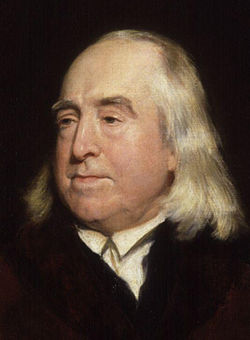
Jeremy Bentham and John Stuart Mill are the founding fathers of classical utilitarianism.

Immanuel Kant formulated a deontological system based on universal laws that apply to all rational creatures.

According to discourse ethics, as formulated by Jürgen Habermas, moral norms are justified by rational discourse within society.

The practices of compassion and loving-kindness are key elements of Buddhist ethics.

The deontic square visualizes the relations between possible moral statuses of an act.

The trolley problem is a thought experiment about the moral difference between doing and allowing harm.

One of the difficulties of applied ethics is to determine how to apply general ethical principles to concrete situations, like medical procedures.

Harm done to animals is a particular concern in animal ethics, for example, as a result of intensive animal farming.

Nuclear ethics addresses the moral implications of nuclear technology, such as atom bombs.

According to Laozi's teachings, which are central to conceptions of ethics in Daoism, humans should aim to live in harmony with the natural order of the universe.

G. E. Moore's book Principia Ethica was partly responsible for the emergence of metaethics in the 20th century.

Simone de Beauvoir explored moral philosophy from the perspective of existentialism.