Epistemology
Knowledge is categorized by its utility, ranging from abstract facts to physical mastery and direct familiarity.
Knowledge is categorized by its utility, ranging from abstract facts to physical mastery and direct familiarity.
Epistemologists distinguish between three distinct ways of "knowing." The most studied is propositional knowledge (knowledge-that), which involves facts that can be stated in sentences, such as "knowing that the sun is a star." This is theoretical and typically viewed as a mental representation of reality. Because it requires complex conceptual thinking, it is often considered a uniquely human trait.
In contrast, practical knowledge (knowledge-how) is the mastery of a skill, like riding a bike or cooking. It is goal-oriented and learned through practice rather than abstract study. Finally, knowledge by acquaintance is the direct, experiential familiarity with a person, place, or sensation—such as "knowing the taste of an apple." This distinction highlights that human understanding is a mix of intellectual data, physical competence, and raw experience.
The traditional "Justified True Belief" formula fails when "epistemic luck" mimics genuine understanding.
The traditional "Justified True Belief" formula fails when "epistemic luck" mimics genuine understanding.
For centuries, the "standard" definition of knowledge required three components: you must believe something, it must actually be true, and you must have a good reason (justification) for believing it. However, 20th-century "Gettier cases" proved this formula is incomplete. These thought experiments show that a person can have a justified true belief through sheer luck, which most philosophers agree does not count as true knowledge.
Consider the "fake barn" scenario: a traveler looks at the only real barn in a field of hundreds of convincing decoys and correctly thinks, "There is a barn." While their belief is true and based on visual evidence, it feels like a fluke. This has led modern thinkers to search for a "fourth condition"—perhaps requiring that the belief-forming process be reliable or that the fact itself must "cause" the belief—to separate genuine insight from fortunate guessing.
The war over the origin of ideas pits sensory experience against the inherent architecture of the mind.
The war over the origin of ideas pits sensory experience against the inherent architecture of the mind.
One of the deepest divides in philosophy is between Empiricism and Rationalism. Empiricists argue that the mind starts as a blank slate and all knowledge must enter through the five senses. This perspective underpins the modern scientific method, prioritizing observation and measurement. If you can’t see, touch, or hear it, the empiricist is skeptical of its status as "knowledge."
Rationalists, however, argue that some truths are independent of experience. They point to mathematics and logic (2+2=4) as "a priori" knowledge—truths the mind can grasp through pure reason without needing to look at the outside world. This debate extends to how we justify our beliefs: Foundationalists believe knowledge is built on a "bedrock" of self-evident truths, while Coherentists argue that a belief is justified only if it fits into a logical web with all our other beliefs.
While psychology describes how we *do* think, epistemology dictates how we *should* think.
While psychology describes how we *do* think, epistemology dictates how we *should* think.
Epistemology is a "normative" discipline, meaning it sets the standards and goals for belief. It doesn't just ask why people believe what they do; it asks if those beliefs are earned. It provides the evaluative tools to determine which methods of acquiring information—such as memory, testimony, or perception—are actually trustworthy.
This separates it from psychology, which is "descriptive." A psychologist might study the neurological process of how a person develops a superstition; an epistemologist studies whether that superstition is a valid way to model reality (usually concluding it is not). By establishing these norms, epistemology serves as the "referee" for other fields, including science, law, and ethics, by defining what constitutes "good" evidence.
Radical skepticism suggests that human cognitive limits may make absolute certainty an impossible goal.
Radical skepticism suggests that human cognitive limits may make absolute certainty an impossible goal.
A major branch of epistemology deals with the boundaries of what can be known. Skepticism challenges our ability to ever reach the truth, with some radical versions suggesting we cannot know anything for certain. Fallibilism offers a middle ground, suggesting that while we can have knowledge, we can never be 100% certain that we aren't mistaken.
These limits arise from two places: our own mental hardware and our external circumstances. Humans may simply lack the "cognitive bandwidth" to understand truths that are too complex, just as a cat cannot understand calculus. Externally, we are often "ignorant" because we lack access to information. Epistemology forces us to confront these blind spots, helping us decide when we have "enough" evidence to act and when we must admit we simply do not know.

Bertrand Russell originated the distinction between propositional knowledge and knowledge by acquaintance.
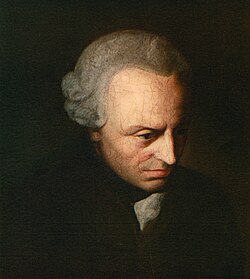
The analytic–synthetic distinction has its roots in the philosophy of Immanuel Kant.

The so-called traditional analysis says that knowledge is justified true belief. Edmund Gettier tried to show that some justified true beliefs do not amount to knowledge.

John Locke and David Hume shaped the philosophy of empiricism.

Diagram of foundationalism, coherentism, and infinitism with arrows symbolizing support between beliefs. According to foundationalism, some basic beliefs are justified without support from other beliefs. According to coherentism, justification requires that beliefs mutually support each other. According to infinitism, justification requires that beliefs form infinite support chains.

Alvin Goldman was an influential defender of externalism.

The Buddhist philosopher Dharmakirti developed a causal theory of knowledge.
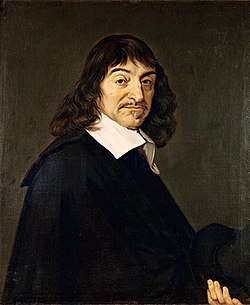
René Descartes used methodological doubt to seek certain foundations for philosophy.