Congress of Vienna
Vienna replaced the slow exchange of diplomatic notes with a face-to-face framework that birthed modern international relations.
Vienna replaced the slow exchange of diplomatic notes with a face-to-face framework that birthed modern international relations.
Before 1814, diplomacy was a cumbersome process of notes shuttled between capitals and isolated talks in far-flung locations. Austrian statesman Klemens von Metternich revolutionized this by gathering all European stakeholders in a single city. This "Congress" format—the first of its kind on a continental scale—enabled immediate feedback, informal negotiation, and the inventorying of interests that would have taken years to resolve via courier.
This innovation established the "Concert of Europe," a doctrine of international cooperation that emphasized maintaining political boundaries and respecting spheres of influence. It proved so effective as a model for consensus-building that it served as the direct inspiration for later peace conferences, including the 1856 Congress of Paris.
The settlement prioritized a "Balance of Power" over simple retribution, resizing nations to serve as mutual stabilizers.
The settlement prioritized a "Balance of Power" over simple retribution, resizing nations to serve as mutual stabilizers.
The primary objective was not merely to punish a defeated France, but to ensure no single nation could ever dominate the continent again. The "Great Powers"—Austria, Britain, Prussia, and Russia—negotiated a geopolitical puzzle where they resized one another to create a state of equilibrium. Prussia was expanded into a Rhine-guarding power, Austria gained territory in northern Italy, and a new Kingdom of the Netherlands was created as a buffer between France and the German states.
This focus on structural stability required a "shepherd" mentality toward smaller powers. Conservative leaders sought to restore the ancien régime, viewing the revolutionary, liberal, and republican movements of the Napoleonic era as existential threats to the continental order. By re-establishing traditional monarchies, they hoped to "contain" the social fires sparked by the French Revolution.
Diplomacy was conducted through a "side program" of lavish balls and salons, turning social excess into a tool for intelligence.
Diplomacy was conducted through a "side program" of lavish balls and salons, turning social excess into a tool for intelligence.
While the "Big Four" conducted the real policy work behind closed doors, the Congress was famous for its relentless social calendar of banquets, balls, and salons. A contemporary joke noted that the Congress "danced but did not move forward," yet this environment was a calculated tactical choice. With over 200 states and princely houses represented, the social swirl provided a low-stakes venue for hearing news, spreading gossip, and building the diplomatic networks necessary for formal agreements.
Even the architecture of the meetings was strategic. The most sensitive work happened in informal, face-to-face deliberative sessions. This "social diplomacy" allowed representatives of lesser powers—who were officially excluded from the inner circle—to still advocate for their interests and present their points of view to the dominant peacemakers during wine and dinner functions.
Talleyrand leveraged the Polish-Saxon deadlock to restore France’s seat at the high table of European power.
Talleyrand leveraged the Polish-Saxon deadlock to restore France’s seat at the high table of European power.
France entered the negotiations in a position of extreme weakness, but its foreign minister, Talleyrand, performed a masterclass in diplomatic maneuvering. When the victorious allies reached a deadlock over the "Polish-Saxon Crisis"—Russia wanted Poland and Prussia wanted Saxony—the coalition nearly collapsed into war. Talleyrand exploited this friction, offering French support to Britain and Austria to counter Russian and Prussian ambitions.
By positioning France as a necessary "tie-breaker" for the balance of power, Talleyrand transitioned his country from a defeated pariah back into one of the "five Great Powers." He successfully avoided the dismemberment of French territory and ensured that the Bourbon restoration would be treated as a partner in European stability rather than a conquered subject.
The Congress secured nearly a century of continental peace at the cost of suppressing emerging democratic movements.
The Congress secured nearly a century of continental peace at the cost of suppressing emerging democratic movements.
The legacy of the Congress is a sharp dichotomy. On one hand, it was a spectacular success in preventing widespread, multi-national wars in Europe for nearly 100 years (until 1914). By focusing on the "Balance of Power" rather than total victory, the negotiators created a system that was flexible enough to resolve disputes through diplomacy for decades.
On the other hand, the settlement was a reactionary triumph for traditional monarchs. By ignoring the rising tide of nationalism and liberalism, the Congress effectively "bottled up" the democratic aspirations of millions. This suppression eventually led to the revolutionary outbursts of 1848, as the artificial boundaries and conservative restrictions imposed in 1815 failed to account for the evolving political identity of the European people.

The national boundaries within Europe agreed upon by the Congress of Vienna

Frontispiece of the Acts of the Congress of Vienna
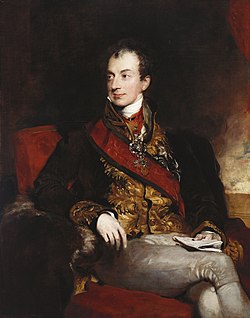
Architect of the Congress System, Prince von Metternich, chancellor of the Austrian Empire from 1821 until the Revolution in 1848. Painting by Lawrence (1815)
![Delegates of the Congress of Vienna in a contemporary engraving by Jean Godefroy after the painting by Jean-Baptiste Isabey: Britain: Arthur Wellesley, 1st Duke of Wellington Portugal: Joaquim Lobo Silveira, 7th Count of Oriola Portugal: António de Saldanha da Gama, Count of Porto Santo Sweden: Count Carl Löwenhielm France: Louis Joseph Alexis, Comte de Noailles [fr] Austria: Klemens Wenzel, Prince von Metternich France: Frédéric-Séraphin de La Tour du Pin Gouverne [fr] Russia: Count Karl Robert Nesselrode Portugal: Pedro de Sousa Holstein, 1st Count of Palmela Britain: Robert Stewart, Viscount Castlereagh France: Emmerich Joseph, Duke of Dalberg Austria: Baron Johann von Wessenberg Russia: Prince Andrey Kirillovich Razumovsky Britain: Charles Stewart, 1st Baron Stewart Spain: Pedro Gómez Labrador, 1st Marquess of Labrador Britain: Richard Le Poer Trench, 2nd Earl of ClancartyNikolaus von Wacken [de] (Recorder) Austria: Friedrich von Gentz (Congress Secretary) Prussia: Baron Wilhelm von Humboldt Britain: William Cathcart, 1st Earl Cathcart Prussia: Prince Karl August von Hardenberg France: Charles Maurice de Talleyrand-Périgord Russia: Count Gustav Ernst von Stackelberg](https://upload.wikimedia.org/wikipedia/commons/thumb/1/17/Congress_of_Vienna.PNG/500px-Congress_of_Vienna.PNG)
Delegates of the Congress of Vienna in a contemporary engraving by Jean Godefroy after the painting by Jean-Baptiste Isabey: Britain: Arthur Wellesley, 1st Duke of Wellington Portugal: Joaquim Lobo Silveira, 7th Count of Oriola Portugal: António de Saldanha da Gama, Count of Porto Santo Sweden: Count Carl Löwenhielm France: Louis Joseph Alexis, Comte de Noailles [fr] Austria: Klemens Wenzel, Prince von Metternich France: Frédéric-Séraphin de La Tour du Pin Gouverne [fr] Russia: Count Karl Robert Nesselrode Portugal: Pedro de Sousa Holstein, 1st Count of Palmela Britain: Robert Stewart, Viscount Castlereagh France: Emmerich Joseph, Duke of Dalberg Austria: Baron Johann von Wessenberg Russia: Prince Andrey Kirillovich Razumovsky Britain: Charles Stewart, 1st Baron Stewart Spain: Pedro Gómez Labrador, 1st Marquess of Labrador Britain: Richard Le Poer Trench, 2nd Earl of ClancartyNikolaus von Wacken [de] (Recorder) Austria: Friedrich von Gentz (Congress Secretary) Prussia: Baron Wilhelm von Humboldt Britain: William Cathcart, 1st Earl Cathcart Prussia: Prince Karl August von Hardenberg France: Charles Maurice de Talleyrand-Périgord Russia: Count Gustav Ernst von Stackelberg

Negotiations at the Congress of Vienna

Talleyrand proved an able negotiator for the defeated French.

Marquis of Labrador, Spanish Ambassador to the Congress of Vienna – painting by Vicente López Portaña

In red: territories left to France in 1814, but removed after the Treaty of Paris

Italian states after the Congress of Vienna with Austrian-annexed territories shown in yellow

The British Empire at the end of the Napoleonic Wars in 1815

Alexander I of Russia considered himself a guarantor of European security.

William II, King of the Netherlands. Painting by Jan Adam Kruseman, 1840

Twelfth Night by George Cruikshank, a contemporary caricature of the leading figures at the congress