Bay of Pigs Invasion
The invasion was the climax of a half-century pattern of U.S. military and economic dominance in Cuba.
The invasion was the climax of a half-century pattern of U.S. military and economic dominance in Cuba.
While the 1961 landing is often viewed as an isolated Cold War blunder, it followed decades of deep American entanglement. After 1902, U.S. settlers and businessmen flooded the island; by 1905, North Americans owned 60% of Cuba's rural property. Between 1906 and 1921, the U.S. Marines intervened in internal Cuban affairs four separate times.
When Fidel Castro overthrew the U.S.-backed dictator Fulgencio Batista in 1959, he targeted this specific legacy. His government nationalized $1.5 billion in U.S.-owned property and launched aggressive agrarian reforms. This economic decoupling—more than just ideology—convinced the Eisenhower administration that Castro was a threat to national security who needed to be removed by force.
A plan conceived by one administration and executed by another left a paramilitary force stranded without air cover.
A plan conceived by one administration and executed by another left a paramilitary force stranded without air cover.
The invasion was a tactical "orphan." It was designed under President Eisenhower, who approved the CIA's plan to train Brigade 2506—a 1,400-man force of Cuban exiles—in Guatemala. However, the operation was handed off to the newly elected John F. Kennedy, who was far more concerned about maintaining "plausible deniability" regarding U.S. involvement.
This hesitation proved fatal. Kennedy decided to withhold the full air and naval support the CIA deemed essential for success. When the main force landed at Playa Girón on April 17, 1961, they were quickly overwhelmed by the Cuban Revolutionary Armed Forces. Without the promised air cover, the invasion collapsed in just three days, ending in a mass surrender on April 20.
Fidel Castro used the threat of American aggression to consolidate personal power and purge moderate revolutionaries.
Fidel Castro used the threat of American aggression to consolidate personal power and purge moderate revolutionaries.
The "revolutionary justice" that followed the 1959 revolution was initially chaotic, but the threat of U.S. intervention allowed Castro to formalize a one-man dictatorship. He famously postponed elections with the slogan "revolution first, elections later," eventually canceling them entirely. Those within his own ranks who questioned the pivot toward communism, like army commander Huber Matos, were arrested for disloyalty.
The Bay of Pigs provided the ultimate domestic propaganda victory. By successfully repelling a U.S.-backed invasion, Castro solidified his status as a national hero. The defeat of the "Yankee" threat allowed him to justify the transition to a socialist state and align more closely with the Soviet Union, arguing that such a partnership was the only way to ensure Cuba's survival.
The humiliation of the defeat shattered the myth of American invincibility and set the stage for the Cuban Missile Crisis.
The humiliation of the defeat shattered the myth of American invincibility and set the stage for the Cuban Missile Crisis.
The invasion was a profound foreign policy disaster that damaged the "New Frontier" image of the Kennedy administration. Beyond the immediate loss of life and prestige, it emboldened anti-U.S. movements across Latin America and proved to the Soviet Union that the U.S. could be outmaneuvered in its own hemisphere.
The most dangerous consequence was the shift in Soviet strategy. Sensing U.S. weakness and Cuba’s desperation for protection, Soviet Premier Nikita Khrushchev began the secret buildup of nuclear weapons on the island. This direct line of escalation led from the failed beaches of the Bay of Pigs in 1961 to the brink of nuclear war during the Cuban Missile Crisis in 1962.

class=notpageimage| Location within Cuba

class=notpageimage| Location within Cuba

Provisional President of Cuba Manuel Urrutia with rebel leaders Che Guevara and Camilo Cienfuegos, 1959

Fidel Castro speaking to the press in Washington D.C., during his 1959 tour of the United States
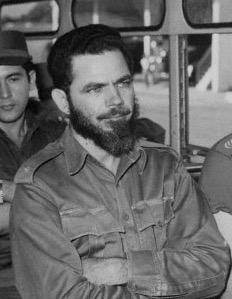
Cuban Army officer Huber Matos after his arrest, being transported to La Cabaña

The ship La Coubre after exploding in the Havana harbor, 1960. Shortly afterward, Castro would deem the explosion a result of American sabotage, worsening US–Cuba relations.

Cuban newspaper announcing the nationalization of industries (October 16, 1960)
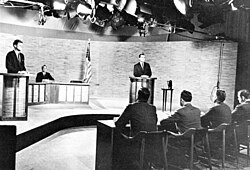
Nixon and Kennedy debating during the 1960 US presidential election

Eisenhower greets Kennedy at the White House. December 6, 1960.

Douglas A-26 Invader "B-26" bomber aircraft disguised as a Cuban model

Cuban defectors practicing parachute drops

Cuban militia in Havana, 1959
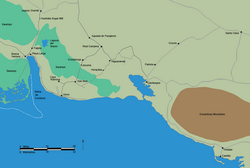
Bahia de Cochinos 1961

Brigade 2506 landing craft at the Bay of Pigs

The Houston after bomb damage